Fifth wheel hitches
Which fifth wheel setup actually clears a short bed?
A standard fifth wheel hitch mounted in a six and a half foot bed does not leave enough room for the trailer's front cap to swing past the cab in a sharp turn. At full steering lock, the nose of the trailer arrives roughly where the back of the cab sits, and that happens at parking lot speed, usually while somebody is backing carefully into a site with a spotter watching. It is not a theoretical spec sheet problem.
There are exactly three real answers. A slider hitch physically moves the pin rearward on rails for manoeuvring, then locks forward again for highway travel. An extended pin box moves the trailer's own coupling point forward relative to its body, buying the same clearance with no moving part on the truck side at all. A gooseneck style coupling, an in-bed ball mounted unit that the trailer's pin box connects to, sits lower and further back than a conventional fifth wheel head and sidesteps the geometry problem entirely.
We could not verify a slider hitch in this catalog against a live listing, so rather than invent one we say so plainly: search a slider fifth wheel hitch here and read the fitment notes carefully before buying, because sliders are truck-bed-length and hitch-brand specific in a way the other two fixes are not.
On this page
Beginner: keep your existing hitch
This fix touches only the trailer side of the connection. Your fifth wheel hitch, rails and truck stay exactly as they are.

Lippert L05 Extended Fifth Wheel Pin Box, 18,000 lb
$700.71Extended geometry that moves the kingpin forward relative to the trailer frame, rated to 18,000 lb, and it connects to any standard fifth wheel hitch with no change to the truck at all.
Best for: A short bed truck with a perfectly good fifth wheel hitch already installed.
Check price on AmazonIntermediate: convert to a gooseneck coupling
This removes the fifth wheel hitch entirely and couples the trailer to a low, in-bed gooseneck ball instead, which sits further back than any fifth wheel head can.
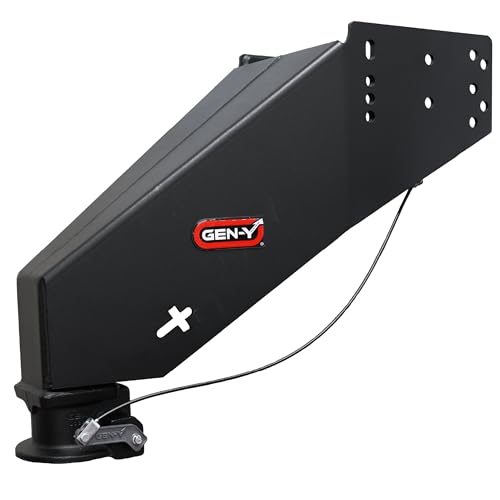
GEN-Y Nomad Fifth Wheel to Gooseneck Static Pin Box
$749.95A static pin box that replaces the kingpin assembly and auto-latches onto a standard 2-5/16 inch gooseneck ball, rated to 6,500 lb of tongue weight, at about 95 lb, lighter than a suspension-equipped alternative.
Best for: Reclaiming full bed access between trips while solving the clearance problem in one move.
Check price on AmazonExpert: the lightest, most convenient gooseneck conversion

Andersen Gen 3 Ultimate Fifth Wheel Connection Gooseneck Adapter, 24,000 lb
$1,154.98 Published ratingsA gooseneck mounted fifth wheel coupling that weighs only 37 lb yet is SAE certified to 24,000 lb GTWR and 4,500 lb of pin weight, with a remote latch cable so you never have to climb into the bed to hitch or unhitch.
Best for: An owner who wants the clearance fix and the lightest possible hitch to lift alone.
Check price on AmazonWho should not buy this tier: A truck that has no gooseneck ball mounted underneath already, and anybody who wants to keep a conventional kingpin-and-jaw connection rather than converting to a gooseneck-style coupling. Both this and the Nomad change what your trailer physically connects to.
Why does a short bed truck have this problem at all?
A fifth wheel hitch sits over or just ahead of the rear axle. As the truck turns, the trailer's kingpin swings in an arc relative to the truck, and the trailer's own front cap follows a wider arc still. In a long bed truck there is enough distance between the cab and the hitch for that arc to clear. In a 6.5 foot bed there frequently is not, and the shortfall shows up specifically at full steering lock, which is exactly the situation you are in while backing into a tight campsite or turning sharply in a fuel station.
The three fixes compared
An extended pin box such as the Lippert L05 Extended Fifth Wheel Pin Box, 18,000 lb keeps your existing fifth wheel hitch; a gooseneck conversion like GEN-Y Nomad Fifth Wheel to Gooseneck Static Pin Box replaces it entirely.
Rule of thumb Widely taught towing convention rather than a published specification. It is a good starting point and it is not a rating.
| Fix | What changes | Keeps your fifth wheel hitch? |
|---|---|---|
| Slider hitch | Truck-side rail lets the whole hitch slide rearward for turns | Yes |
| Extended pin box | Trailer-side geometry moves the kingpin forward | Yes, the L05 bolts to your current hitch |
| Gooseneck coupling | Trailer connects to an in-bed ball instead of a kingpin jaw | No, replaces it with a static gooseneck pin box or a lightweight gooseneck adapter |
The right fix depends on whether you would rather keep your current hitch or accept a different coupling entirely. Neither approach is more "correct" than the other; they solve the same clearance problem from opposite ends.
How do you check your own clearance before buying anything?
- Find flat, open ground. A parking lot with nothing behind you, so a mistake costs paint rather than a person.
- Hitch up as usual. With the trailer loaded close to how you actually tow it, since ride height changes the geometry slightly.
- Turn to full lock, slowly. With a second person watching the gap between the trailer front cap and the truck cab the entire time, not just at the end.
- Stop the instant they call it close. Do not wait for contact to confirm the problem. A few inches of clearance at slow speed can become zero with any additional dip or lean.
- Measure the actual gap. Knowing whether you are two inches short or eight inches short changes which fix makes sense, since an extended pin box buys a fixed amount of clearance and a gooseneck conversion buys considerably more.
How we chose
We did not test this hardware in person and we never claim to. Picks are researched from manufacturer specification sheets, published towing standards, and the recurring themes in verified owner reviews. Every pick is matched to a real gross trailer weight rating, a real tongue or pin weight rating, a real receiver size or a real load index rather than to a price bracket, and it is placed in the tier where its published capability actually belongs. We rejected the unbranded flood that dominates the search results in several of these categories, because a weight distribution hitch, a brake controller, a trailer tire and a set of safety chains are all parts whose failure puts a loose trailer on a public road. Where a figure is towing convention rather than a published standard we label it that way, and where a manufacturer does not publish a figure we leave it out instead of estimating it.
Frequently asked questions
What is a slider fifth wheel hitch and why is there no product pick here?
A slider hitch mounts on rails that let the whole hitch, and the trailer attached to it, slide several inches rearward during a tight turn, then relock forward for highway travel. We could not verify a specific slider hitch listing against a live catalog record, so rather than recommend one blind, we say so directly and point you to a scoped search instead.
How much bed length do I actually need for a fifth wheel?
There is no single number, because it depends on the trailer's kingpin setback, the truck's wheelbase and cab length, and how tight a turn you actually make. The reliable answer is to test your own combination at full steering lock on open pavement, which tells you the real clearance rather than a rule of thumb from a different truck and trailer.
Does an extended pin box reduce my trailer's rated capacity?
No, when matched correctly. The Lippert L05 is rated to 18,000 lb in its own right, and an extended pin box changes where the kingpin sits relative to the trailer frame, not how much weight the connection is built to carry. Confirm the pin box's own GTW rating covers your trailer's loaded weight before buying, the same as with any fifth wheel hardware.
Is a gooseneck-style fifth wheel adapter as strong as a standard fifth wheel hitch?
The ones in this catalog are SAE certified in their own right. The Andersen Gen 3 Ultimate is rated to 24,000 lb GTWR and 4,500 lb of pin weight despite weighing only 37 lb, and the GEN-Y Nomad is rated to 6,500 lb of tongue weight. Match the rating to your trailer's actual loaded weight rather than assuming lighter means weaker.
Can I still use my existing fifth wheel hitch with an extended pin box?
Yes, that is the entire point of that fix. The Lippert L05 bolts onto the trailer frame and its kingpin connects to any standard fifth wheel hitch you already own, so nothing on the truck side changes. A gooseneck conversion is the opposite approach: it replaces the connection entirely rather than extending it.
Will a longer bed truck ever have this problem?
Rarely, which is exactly why the fix belongs on the trailer or the connection rather than on every truck. An 8 foot bed generally has enough distance between the cab and the hitch to clear a fifth wheel's arc at full lock, so this page is specifically for the 6.5 foot and shorter bed lengths where the geometry runs out.
Free download
Get the complete tow rig setups emailed to you
Both ladders, conventional travel trailer and fifth wheel, at beginner, intermediate and expert budgets, every item priced and linked with a running total, plus a printable pre-trip weighing worksheet you can fill in at the scale.
One email with the setups. No sequence, no sharing your address, unsubscribe any time.
Researched, not professional advice. This page is compiled from published standards, manufacturer towing guides and product specifications, and owner-review consensus, not hands-on testing. Figures described as a rule of thumb are towing convention rather than published standards, and they are labelled that way wherever they appear. Nothing here overrides your own ratings. Work your payload sum before your tow rating, because payload is the limit that actually binds on most half ton trucks and nearly every SUV. Load a conventional trailer to 10 to 15 percent tongue weight and a fifth wheel to 15 to 25 percent pin weight, and never lighter: a tail heavy trailer is what starts sway. Weigh the rig loaded rather than trusting a brochure dry weight. A weight distribution hitch and a set of air bags both restore ride height and control, and neither one raises a single rating. Trailer brakes are required by state law above a threshold that varies by state, and a breakaway battery that has quietly gone flat is the normal condition of most trailers on the road.