Weights and capacities
What is left of your payload?
Almost every towing disappointment traces back to this sum. The brochure tow rating is calculated with a driver in the seat and nothing else in the vehicle: no passengers, no gear, no hitch, no bed load. Add a real family and a real hitch, and payload runs out long before the tow rating does.
Enter the payload figure from your own door jamb sticker. That number is specific to your individual vehicle including the options it was built with, so a review of the same model will give you a different figure and it will be the wrong one.
Run your own payload sum
880 lb left for tongue weight. That is a payload ceiling, not a tow rating.
| Figure | Value |
|---|---|
| Payload rating | 1,700 lb |
| Passengers | 520 lb |
| Gear | 200 lb |
| Hitch hardware | 100 lb |
| Left for tongue or pin weight | 880 lb |
| Trailer this supports at 12 percent | 7,333 lb |
Shown with the example figures above. Change any field to run your own numbers.
The working
From your own vehicleremaining = payload rating - passengers - cargo - hitch hardware - tongue or pin weight trailer this supports = remaining / tongue or pin percentage
The payload rating is a vehicle-specific figure and nothing on this site can supply it. This number exists only on your own vehicle and trailer. Read it off the door jamb sticker, the trailer certification label or the owner manual.
For a tow vehicle working near its payload
Helper springs and air bags level a squatting rear end and steady the ride. They do not raise payload, GVWR or any axle rating, and nothing sold anywhere does. A scale is what tells you whether the sum above is real.

Air Lift 1000 HD Air Spring Kit for Ram 1500
$213.99The heavy duty version of the same kit, with a higher maximum inflation pressure and more support at the top of the range.
Best for: A Ram 1500 towing near the top of its payload.
Check price on Amazon
Sherline LM 1000 Trailer Tongue Weight Scale, 1,000 lb
$189.90Sherline is the scale the towing community actually uses, and a 1,000 lb capacity covers most travel trailers. Hydraulic, with no batteries to be dead when you need it.
Best for: A trailer whose tongue weight is under 1,000 lb.
Check price on Amazon
Sherline LM 2000 Trailer Tongue Weight Scale, 2,000 lb
$189.90Double the capacity for the same money as the LM 1000, which makes it the sensible default unless you are certain your tongue weight is low.
Best for: Most travel trailers, with headroom for a heavier one later.
Check price on Amazon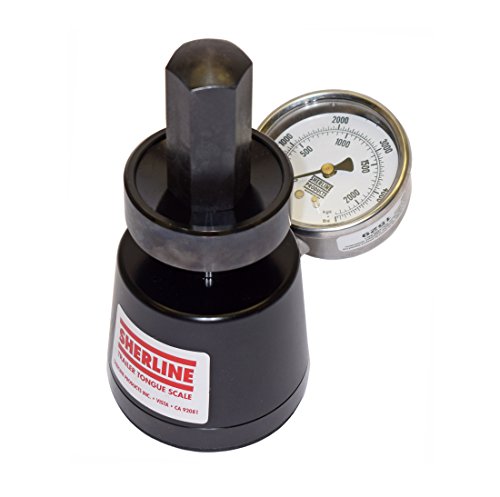
Sherline LM-5000 Trailer Tongue Weight Scale, 5,000 lb
$189.90Five thousand pounds, which is what it takes to weigh a fifth wheel pin rather than a bumper pull tongue.
Best for: Weighing fifth wheel pin weight at home.
Check price on Amazon
Air Lift 1000 Air Spring Kit for Ram 1500
$149.99Adjustable air springs inside the rear coils, so the ride height can be set for the load and dropped back down when the trailer is off. Air Lift publishes vehicle specific fitment rather than selling a universal kit.
Check before buying: Air springs level the truck. They do not add payload capacity, they do not change the GVWR and they do not change the rear axle GAWR. Nothing in this category does.
Best for: A Ram 1500 that squats with a heavy tongue weight.
Check price on Amazon
Air Lift 1000 Air Spring Kit for Toyota 4Runner and Lexus GX460
$149.99SUVs squat harder than trucks under the same tongue weight because they have less rear spring and a shorter wheelbase. This is the fit for a 4Runner or GX460.
Best for: Towing a small trailer with a 4Runner or GX460.
Check price on AmazonEvery rating shown is the manufacturer's own published figure. The rating on the part you receive is what governs, and your own door jamb sticker governs everything above it.
Where to find your payload figure
On a yellow sticker inside the driver door jamb on any vehicle built since 2006, phrased as "the combined weight of occupants and cargo should never exceed X lb". That X is your payload.
It is specific to your individual vehicle as built. A crew cab with a sunroof, four wheel drive and a heavy option package can have several hundred pounds less payload than the same model in a review, because every one of those options was installed before the sticker was printed.
What comes out of payload
Everything that was not in the vehicle when it left the factory. This is where sums go wrong, and it goes wrong in the same predictable ways.
A weight distribution hitch is about 100 lb of steel and a fifth wheel hitch about 200 lb, before a single passenger.
Rule of thumb Widely taught towing convention rather than a published specification. It is a good starting point and it is not a rating.
| What | Typical weight |
|---|---|
| An adult | 180 lb |
| A child | 80 lb |
| A large dog | 60 lb |
| Weight distribution hitch hardware | 100 lb |
| Fifth wheel hitch | 200 lb |
| Gooseneck ball and kit | 60 lb |
| A 2000 watt generator | 48 lb |
| A 3500 watt generator | 100 lb |
| A full bed toolbox | 120 lb |
| A bike rack and two bikes | 90 lb |
| A bundle of firewood | 40 lb |
These are illustrative averages. Weigh your own people and gear if the sum comes out close, because it usually does. One thing that does NOT come out of payload is fuel: the rating is calculated with the tanks full.
What people forget to count
- Everything already bolted on. A bed cover, a toolbox, running boards, a roof rack, heavier tires and a bull bar were all added after the sticker was printed.
- The hitch itself. It is not part of the trailer.
- The dog. Genuinely.
- Water carried in the tow vehicle, at 8.34 lb per gallon.
And the biggest one: tongue or pin weight is carried by the tow vehicle, not by the trailer. That is the whole reason this sum matters.
What air bags and helper springs do not do
When the rear of the truck squats under tongue weight, air bags or helper springs will bring it back to level, and the truck will feel and steer better. That is a real improvement and it is worth having.
It does not change a single rating. Air bags do not add payload, they do not raise the GVWR, and they do not raise the rear axle GAWR. A truck sitting level while 400 lb over its payload rating is still 400 lb over, and the only thing that changed is that you can no longer see it. The same is true of a weight distribution hitch. Both are handling fixes. Neither is a capacity fix.
Frequently asked questions
Where do I find my payload rating?
On a yellow sticker inside the driver door jamb of any vehicle built since 2006, phrased as the combined weight of occupants and cargo never exceeding a stated figure. It is specific to your individual vehicle including the options it was built with, so a review of the same model, or the same model with a different package, will give a different and wrong number.
Why does payload run out before tow rating?
Because a published tow rating is calculated with only a driver in the vehicle, while tongue weight is 10 to 15 percent of the trailer and pin weight is 15 to 25 percent. Add passengers, gear and the hitch, and the payload sum fails long before the combined weight approaches the tow rating. Work payload first, and if it fails the tow rating is irrelevant.
Does fuel count against payload?
No. Payload ratings are calculated with the fuel tanks full, so the fuel is already in the curb weight the rating was derived from. Everything else that was not in the vehicle when it left the factory does count: the hitch, the bed cover, the toolbox, the passengers, the dog and all the gear.
Do air bags increase payload capacity?
No. Air bags and helper springs restore ride height and improve handling when the rear suspension squats, and they change nothing about the GVWR, the payload rating or the axle ratings. An overloaded truck sitting level is still overloaded, and the visual cue that something was wrong has been removed. Treat them as a handling upgrade, never as capacity.
What happens if I exceed my payload?
The vehicle is over its GVWR, which means the springs, axles, wheels, tires and brakes are all carrying more than they were specified for, and the braking distance and handling that the manufacturer validated no longer apply. It is also a legal problem, and an overweight vehicle in a crash investigation is not a good position to be in.
Should I check anything besides payload?
Yes, four more limits, and the lowest of all of them governs. The rear axle GAWR, which a fifth wheel can exhaust while the vehicle is still inside its GVWR. The GCWR, covering vehicle and trailer together. The tow rating for your exact configuration. And the rating printed on your receiver hitch, which is frequently below its class ceiling.
Free download
Get the complete tow rig setups emailed to you
Both ladders, conventional travel trailer and fifth wheel, at beginner, intermediate and expert budgets, every item priced and linked with a running total, plus a printable pre-trip weighing worksheet you can fill in at the scale.
One email with the setups. No sequence, no sharing your address, unsubscribe any time.
Researched, not professional advice. This page is compiled from published standards, manufacturer towing guides and product specifications, and owner-review consensus, not hands-on testing. Figures described as a rule of thumb are towing convention rather than published standards, and they are labelled that way wherever they appear. Nothing here overrides your own ratings. Work your payload sum before your tow rating, because payload is the limit that actually binds on most half ton trucks and nearly every SUV. Load a conventional trailer to 10 to 15 percent tongue weight and a fifth wheel to 15 to 25 percent pin weight, and never lighter: a tail heavy trailer is what starts sway. Weigh the rig loaded rather than trusting a brochure dry weight. A weight distribution hitch and a set of air bags both restore ride height and control, and neither one raises a single rating. Trailer brakes are required by state law above a threshold that varies by state, and a breakaway battery that has quietly gone flat is the normal condition of most trailers on the road.