Trailer safety
Which trailer breakaway kit should you buy, and is your current one even charged?
A breakaway switch is a pin on a cable, wired so that pulling the pin free dumps 12 volt power straight to the trailer's electric brakes, locking them on if the trailer ever separates from the tow vehicle while moving. It is required equipment on braked trailers in most states. What almost nobody checks is the one thing that makes it work at all: a charged battery inside the breakaway box. A flat battery there does not throw a warning light, does not change how the trailer tows, and does not announce itself in any way. It is simply dead, silently, until the one moment it is needed.
The cable itself has a second, quieter failure mode. It has to attach to a fixed point on the tow vehicle, never to a safety chain, because a safety chain is meant to stretch and give under a real separation, which can pull the breakaway pin the wrong way or fail to pull it at all depending on how the chain plays out. A cable clipped to a chain link instead of the vehicle is a common, silent mistake that a walk-around inspection will not always catch unless you are specifically looking for it.
Test the whole system before every trip by pulling the pin with the trailer still hitched and the tow vehicle's ignition on: the trailer brakes should lock on immediately. If they do not, the problem is almost always the battery, not the switch.
On this page
- Why is a dead breakaway battery so common?
- How we chose
- Beginner: replacing a frayed cable or a bare switch
- Intermediate: a clean switch replacement
- Expert: the complete system, battery and all
- How do these options compare?
- How do you actually test a breakaway switch?
- Where should the breakaway cable actually attach?
Why is a dead breakaway battery so common?
The battery inside a breakaway box is small, it is charged automatically off the trailer's own 12 volt system whenever the trailer is connected and the tow vehicle is running, and it sits untouched for months at a time between real uses. Trailers that are stored for a season, towed only a handful of times a year, or plugged in only briefly for short local trips often never give that small battery enough charging time to stay topped up. Nothing about towing normally, hitching normally, or driving normally reveals that the battery inside the box has quietly discharged, which is exactly why it is the normal, undetected condition of a large share of trailers on the road.
How we chose
We did not install or test any of these ourselves. Picks come from the manufacturer's own published description of the hardware, checked against the consensus of verified owner reviews.
Beginner: replacing a frayed cable or a bare switch
The cheapest correct fix when the problem is a worn cable or a failed switch itself, not the battery.

Fastway Zip 6 Foot Breakaway Cable and Switch
$22.78Cable and switch together in bright red at six feet, long enough to reach a receiver where a bumper is in the way. The bright color matters: a cable clipped to a safety chain instead of the tow vehicle is much easier to spot on a walk-around when it is not hidden in dull gray.
Best for: Replacing a corroded or too-short breakaway cable.
Check price on Amazon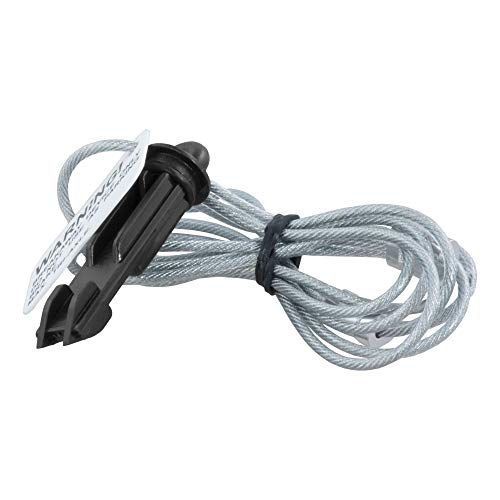
CURT 52020 Replacement Trailer Breakaway Switch Lanyard
$6.39The lanyard alone, for when the switch itself is fine and only the cable has frayed.
Best for: A cheap fix to a frayed breakaway cable without replacing the whole switch.
Check price on AmazonIntermediate: a clean switch replacement
A full switch swap without turning it into a wiring project.

Buyers Products Breakaway Switch with 48 Inch Prewired Cable Loop
$14.07Prewired with a 48 inch cable loop, so the install is two connections rather than cutting into the trailer's existing harness.
Best for: Replacing a switch without splicing into the trailer wiring.
Check price on Amazon
Bargman Trailer Breakaway Switch
$11.99A plain replacement switch from a long established trailer electrics maker, for a direct swap on an older trailer.
Best for: A straightforward switch swap on an older trailer with existing wiring.
Check price on AmazonExpert: the complete system, battery and all
The only tier here that actually solves the battery problem instead of assuming it away.

Trailer Brake Breakaway Kit with Charger, LED Display and 12V 5Ah Battery
$49.99Includes a 12V 5Ah battery, a charger and an LED display that shows charged, charging or needing a recharge at the push of a button, which is the one piece of information a plain switch and cable can never give you.
Best for: A trailer whose breakaway battery condition is currently an unknown quantity.
Check price on AmazonWho should not buy this tier: Skip this tier if you already test and monitor your own breakaway battery's state of charge on a regular schedule; a plain switch and battery you actually maintain does the same job. This tier exists specifically for the far more common case where nobody has checked the battery in years.
How do these options compare?
A breakaway switch alone does nothing without a charged battery behind it. Only one option below includes one.
Only the Bunker breakaway kit in this table includes a battery and a way to see its charge state; every other option assumes a working battery is already in place.
Published standard A published, traceable figure: a standards body, a federal regulation or a manufacturer specification states it.
| Hardware | Includes a battery | Charge indicator | Cable length |
|---|---|---|---|
| the Fastway Zip 6 foot cable and switch | No | No | 72 in |
| the Fastway Zip 4 foot cable and switch | No | No | 48 in |
| Trailer Brake Breakaway Kit with Charger, LED Display and 12V 5Ah Battery | Yes, 12V 5Ah | Yes, LED | Not published |
| the CURT replacement lanyard | No | No | 48 in |
| the Buyers prewired switch | No | No | 48 in |
| the Bargman replacement switch | No | No | Not published |
"Not published" means the maker did not state that figure in its own listing. A battery and a charge indicator are what actually answer whether the system will work when it is needed.
How do you actually test a breakaway switch?
With the trailer hitched and the tow vehicle's ignition on so the trailer brakes have power, pull the breakaway pin free by hand. The trailer wheels should lock immediately, the same way they would if the trailer had truly separated. Release the pin, reset it, and move on. If nothing happens, the battery is almost always the culprit rather than the switch itself, since the switch is a simple mechanical connection with very little to fail on its own. Fold this into your pre-trip towing inspection every time, not just after buying new hardware.
Where should the breakaway cable actually attach?
To a fixed point on the tow vehicle itself, such as the hitch or a dedicated attachment point, never to a safety chain. Safety chains are designed to stretch and absorb shock during a real separation, and a breakaway cable riding on one can be pulled at the wrong angle, pulled too late, or not pulled with enough force to trip the switch. See the full walkthrough in our guide to using a breakaway switch, and keep a spare battery and fuse in your trailer emergency kit so a dead breakaway battery discovered on the road is a five minute fix rather than a canceled trip.
How we chose
We did not test this hardware in person and we never claim to. Picks are researched from manufacturer specification sheets, published towing standards, and the recurring themes in verified owner reviews. Every pick is matched to a real gross trailer weight rating, a real tongue or pin weight rating, a real receiver size or a real load index rather than to a price bracket, and it is placed in the tier where its published capability actually belongs. We rejected the unbranded flood that dominates the search results in several of these categories, because a weight distribution hitch, a brake controller, a trailer tire and a set of safety chains are all parts whose failure puts a loose trailer on a public road. Where a figure is towing convention rather than a published standard we label it that way, and where a manufacturer does not publish a figure we leave it out instead of estimating it.
Frequently asked questions
What does a trailer breakaway switch actually do?
It applies the trailer's own electric brakes at full power if the trailer separates from the tow vehicle while moving, using a pin that pulls free of a cable and completes a circuit to the trailer's battery. This is meant to bring a separated trailer to a stop rather than letting it roll free, and it is required equipment on braked trailers in most states.
Why is my breakaway battery dead, and how would I know?
The small battery inside a breakaway box charges only while the trailer is connected to a running tow vehicle, and months of light towing or storage between trips can leave it undercharged with no warning. The only way to know is to test it directly, either by pulling the pin with the trailer hitched or using a kit with a built-in charge display.
Should the breakaway cable attach to the safety chains?
No. The breakaway cable should attach to a fixed point on the tow vehicle itself, such as the hitch, never to a safety chain. A safety chain is designed to stretch during a real separation, which can pull a clipped-on breakaway cable at the wrong angle or with the wrong timing instead of tripping the switch cleanly.
How do I test a breakaway switch before a trip?
With the trailer hitched and the tow vehicle's ignition on, pull the breakaway pin free by hand. The trailer brakes should lock on immediately. Release and reset the pin afterward. If nothing happens, the battery inside the breakaway box is the most likely cause, since the switch itself is a simple mechanical part with little else to fail.
Is a trailer breakaway switch legally required?
Requirements vary by state and generally apply above a certain trailer weight threshold, so there is no single federal number that covers every trailer. Check your own state's DMV or DOT requirements and your trailer's certification label rather than assuming your trailer is exempt, since most braked trailers do require one.
Can I use any 12V battery in a breakaway box?
Use the size and type the breakaway box was designed for, commonly a small sealed lead acid battery rated in the 4 to 6 Ah range. A battery that does not fit the box's charging circuit correctly may not charge properly even while connected, which recreates the exact silent failure this hardware exists to prevent.
Free download
Get the complete tow rig setups emailed to you
Both ladders, conventional travel trailer and fifth wheel, at beginner, intermediate and expert budgets, every item priced and linked with a running total, plus a printable pre-trip weighing worksheet you can fill in at the scale.
One email with the setups. No sequence, no sharing your address, unsubscribe any time.
Researched, not professional advice. This page is compiled from published standards, manufacturer towing guides and product specifications, and owner-review consensus, not hands-on testing. Figures described as a rule of thumb are towing convention rather than published standards, and they are labelled that way wherever they appear. Nothing here overrides your own ratings. Work your payload sum before your tow rating, because payload is the limit that actually binds on most half ton trucks and nearly every SUV. Load a conventional trailer to 10 to 15 percent tongue weight and a fifth wheel to 15 to 25 percent pin weight, and never lighter: a tail heavy trailer is what starts sway. Weigh the rig loaded rather than trusting a brochure dry weight. A weight distribution hitch and a set of air bags both restore ride height and control, and neither one raises a single rating. Trailer brakes are required by state law above a threshold that varies by state, and a breakaway battery that has quietly gone flat is the normal condition of most trailers on the road.